


Providence Catholic Alumnus Dr. Dan Salazar-Gallegos ’14 Contributes to Nobel Prize-Recognized Scientific Research
From a high school research paper at Providence Catholic to groundbreaking astrophysics research recognized on the world stage, Dr. Dan Salazar-Gallegos ’14 is helping scientists uncover some of the universe’s greatest mysteries.
Providence Catholic High School is proud to spotlight alumnus Dr. Dan Salazar-Gallegos ’14, a physicist and researcher at Michigan State University whose work with the IceCube Neutrino Observatory is part of an extraordinary international scientific effort recently recognized with the 2026 Nobel Prize in Physics.
On October 6, 2026, the Nobel Prize in Physics was awarded to Francis Halzen, principal investigator of the IceCube Neutrino Observatory, in recognition of his pioneering contributions to the observatory and the discovery of high-energy neutrinos originating from distant regions of the universe.
For Salazar-Gallegos, a member of the IceCube Collaboration, the recognition represents an extraordinary milestone in a career devoted to expanding humanity’s understanding of the cosmos.
“I am proud and jubilant to be part of such a prestigious collaboration and community,” he shared. “I’ve aspired to be part of pushing the boundary [of] human knowledge and physics. Before Tuesday, I was always a little uncertain that I was making progress toward this goal. Now, that uncertainty is gone and it’s a weight off my shoulders.”

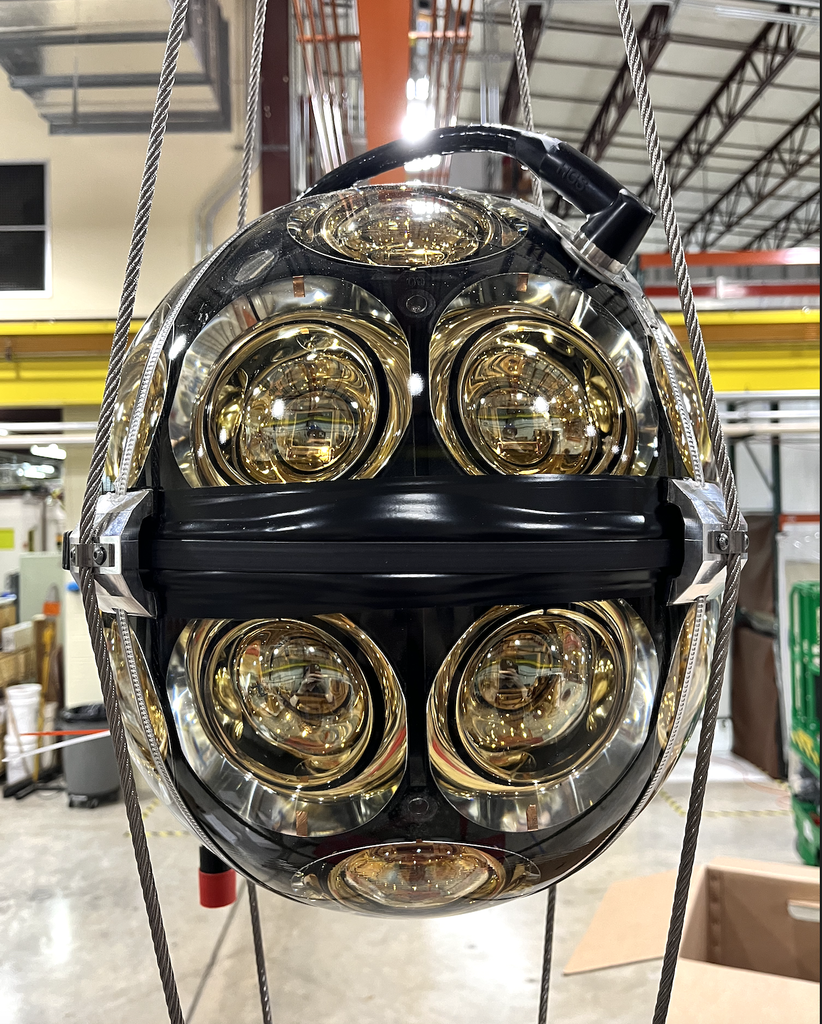
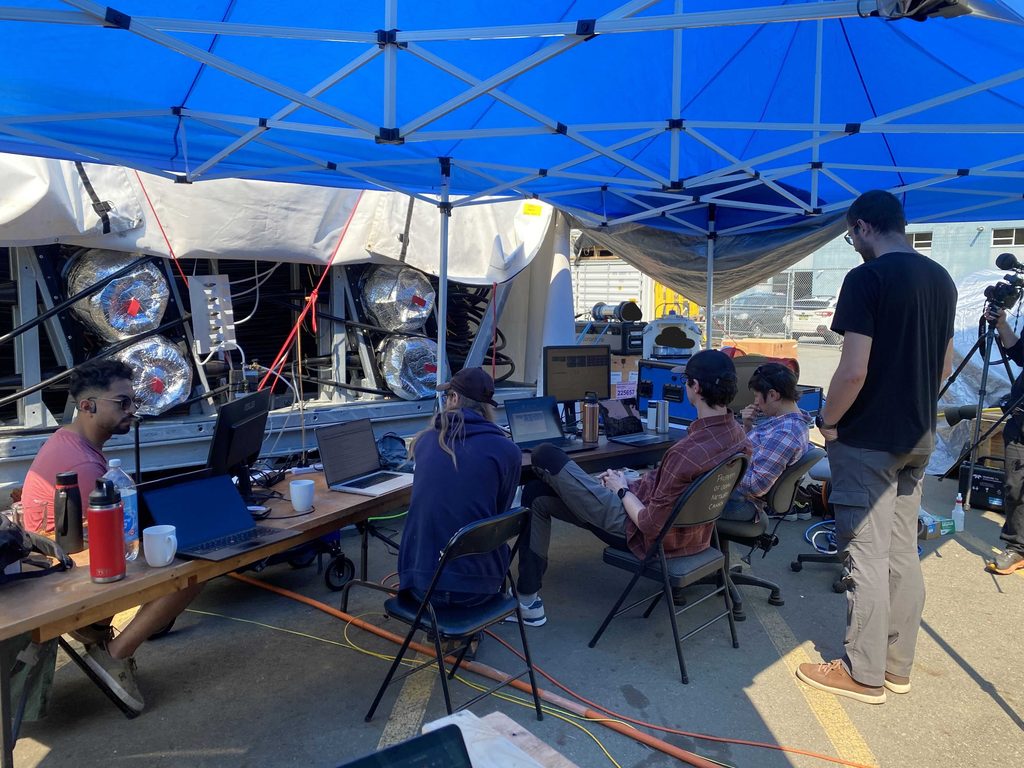
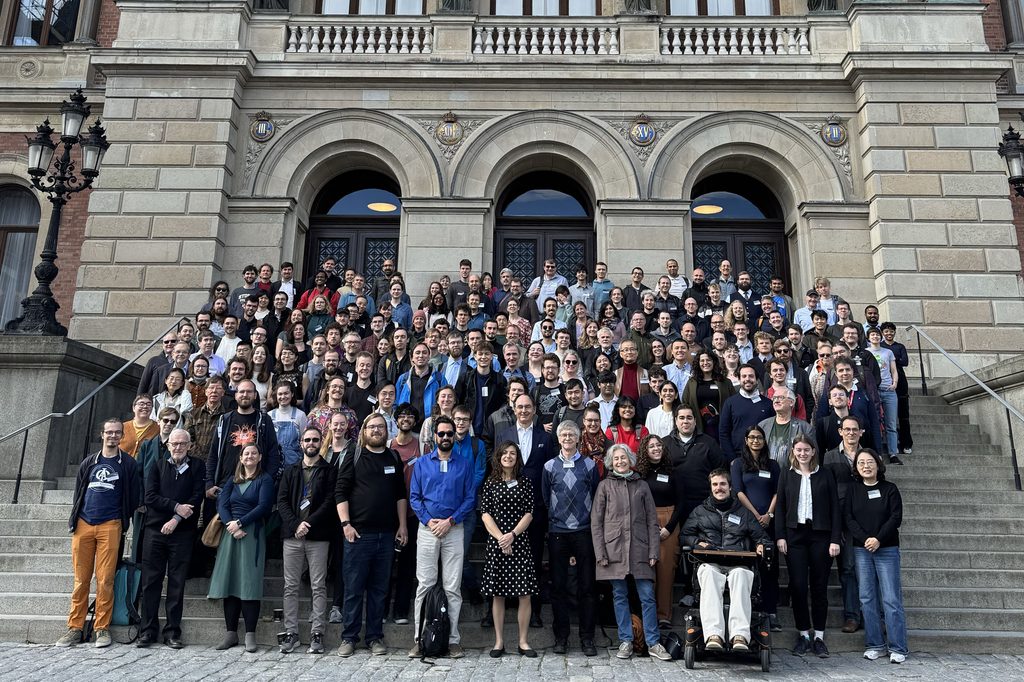
His contributions to IceCube include researching dark matter, developing sophisticated scientific software, and leading the production and quality control of advanced instruments deployed beneath the Antarctic ice.
But his journey into astrophysics began much closer to home, in a Providence Catholic classroom, where an assignment to write a research paper sparked a fascination that would ultimately shape his life’s work.
A Spark of Curiosity at Providence Catholic
When Salazar-Gallegos first arrived at Providence Catholic, he imagined a future in information technology or computer science. That changed when a research assignment challenged him to explore a topic outside his comfort zone.
He chose quantum mechanics.
“I had to learn about the weird quantum world in order to write the paper and I was hooked,” he recalled.
That assignment sparked a fascination with physics that would shape his future. In fact, he still keeps the original research paper beside his desk in his home office, a reminder of where his journey began.
Inspired by his newfound interest, Salazar-Gallegos enrolled in honors and Advanced Placement physics and mathematics courses at Providence. He also joined the Math Team, competing alongside teammates who earned recognition at the regional and state levels.
He credits several Providence Catholic educators with helping him build the foundation for his future career.
“There were many lessons learned in my math courses with Ms. Begeske that I applied even into Grad school,” he shared. “I feel like my math foundation was very strong.”
He also remembers the encouragement he received from Fr. Nick and Mr. Richards, particularly during hands-on physics experiments that brought classroom concepts to life.
“It felt so cool to use physics equations learned in class and apply them to motion of carts or balls,” he recalled. “It was especially cool when the predictions made were born out in real time. I remember feeling like a wizard.”
That same sense of wonder continues to inspire his work today.
From the Classroom to World-Renowned Laboratories
Following his graduation from Providence Catholic, Salazar-Gallegos attended the University of Illinois Urbana-Champaign, earning his undergraduate degree in physics.
There, he received an opportunity that would launch his research career when he joined Professor Ben Hooberman’s research group working with the ATLAS experiment at CERN, the European Organization for Nuclear Research in Geneva, Switzerland.
CERN is one of the world’s leading centers for particle physics and is home to the Large Hadron Collider, where scientists discovered the Higgs boson in 2012.
As an undergraduate researcher, Salazar-Gallegos became the primary technician responsible for advanced electronics used to identify and track particles within the ATLAS detector.
His contributions earned him the opportunity to travel to Geneva to help implement the technology, making him one of approximately 30 American undergraduate students selected for the experience.
“It was a major privilege and highlight of my life,” he said.
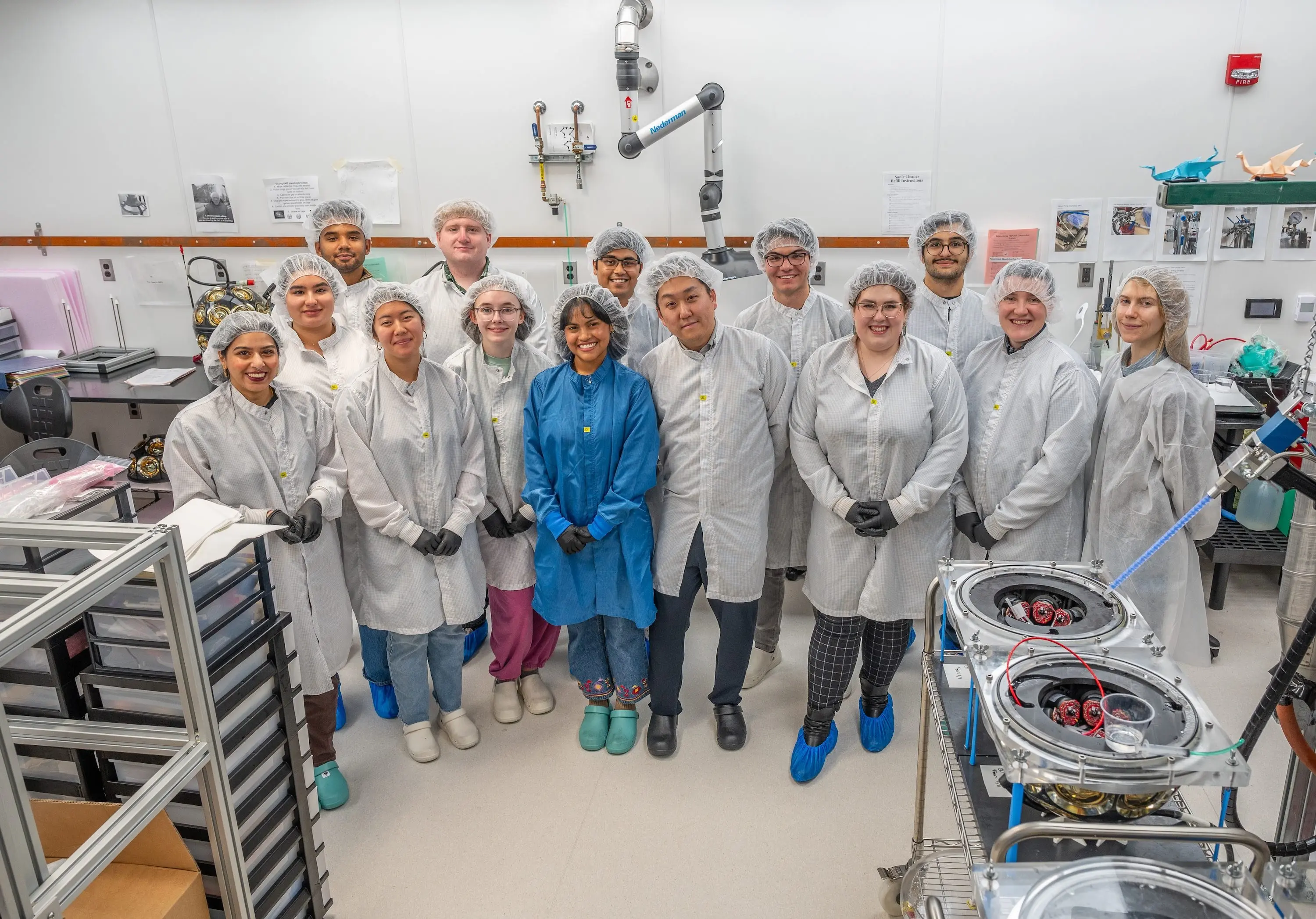
Research on ice: Spartan students help unlock cosmic mysteries in Antarctica | MSUToday | Michigan State University. A group poses at the IceCube lab in early November. Photo by Derrick L. Turner.
He also completed research internships at Fermilab, where he worked with the CMS experiment and investigated whether even smaller fundamental particles might exist. Although the research did not uncover evidence of new particles, the experience introduced him to neutrinos, mysterious subatomic particles that would become central to his future work.
Salazar-Gallegos continued his education at Michigan State University, where he earned two doctoral degrees, one in physics and another in applied computational mathematics.
Under the guidance of his doctoral advisor, Professor Kirsten Tollefson, he shifted his research focus toward astrophysics, working with the High-Altitude Water Cherenkov (HAWC) Observatory and eventually the IceCube Neutrino Observatory.
Throughout his graduate studies, he collaborated with researchers at institutions including Los Alamos National Laboratory, Fermilab, CERN, and the University of Wisconsin–Madison.
He successfully defended his doctoral research in April 2024 and has continued his work at Michigan State University.
Exploring the Universe from Beneath the Antarctic Ice
Among Salazar-Gallegos’ most significant professional experiences is his involvement with the IceCube Neutrino Observatory, one of the world’s most remarkable scientific instruments.
Located at the South Pole, IceCube uses thousands of highly sensitive optical sensors embedded deep within Antarctic ice to detect neutrinos, tiny, elusive particles that travel through the universe and pass through ordinary matter almost undisturbed.
By studying these particles, scientists can learn about some of the universe’s most powerful and mysterious phenomena, including exploding stars, black holes, and potentially dark matter.
For Salazar-Gallegos, IceCube represents something extraordinary: an entirely new way of observing the universe.
“If there is a single take away I want people to have about IceCube, it is that it is responsible for opening an entirely new field of physics,” he explained.
IceCube has helped establish neutrino astronomy as a powerful new way to study the cosmos, including producing a groundbreaking neutrino-based image of the Milky Way.
“This has never been done in human history before,” he said, comparing the excitement of these discoveries to Galileo’s earliest astronomical observations.
Salazar-Gallegos has made important contributions to the experiment, from developing and repairing specialized electronics to analyzing neutrino data in search of evidence of dark matter.
More recently, he served as the lead scientist overseeing Michigan State University’s production, quality control, and delivery of 205 advanced optical detector modules for the IceCube Upgrade. The devices were designed to enhance the observatory’s ability to detect and study neutrinos with greater precision.
He also helped develop the infrastructure and procedures necessary to produce the sophisticated instruments to scientific standards.
Searching for One of the Universe’s Greatest Mysteries
Of all the questions scientists are working to answer, one stands above the rest for Salazar-Gallegos: What exactly is dark matter?
Although scientists believe dark matter makes up a substantial portion of the universe’s matter, its fundamental nature remains unknown. Researchers cannot observe it directly through ordinary light, but they can study its gravitational effects on galaxies and other cosmic structures.
“It’s one of the most elusive mysteries of modern physics,” Salazar-Gallegos explained.
His doctoral research focused on searching for potential dark matter signals from dwarf galaxies, relatively small galaxies orbiting the Milky Way that are believed to contain high concentrations of dark matter.
Using IceCube’s neutrino observations, he developed sophisticated software and analysis techniques to investigate an unusually broad range of possible dark matter signatures.
The project remains among his proudest professional accomplishments, and he is working toward publishing the results.
His long-term ambition extends beyond any single experiment. He hopes to help standardize dark matter research methods so scientists around the world can more effectively compare findings, evaluate unusual results, and collaborate toward a discovery.
“The long long term goal is to be on the team that says something definitive about dark matter,” he shared.
Looking Toward the Next Generation of Discovery
Salazar-Gallegos is already helping prepare for the future of neutrino astronomy.
In addition to his IceCube research, he is involved with P-ONE, the Pacific Ocean Neutrino Experiment, a next-generation observatory being developed to detect neutrinos deep beneath the Pacific Ocean.
His current responsibilities include leading quality control and developing testing procedures for new scientific instruments that will support the project.
He is also pursuing research that combines IceCube’s neutrino data with gamma-ray observations, bringing together different approaches to studying the universe and improving how scientists share and interpret their findings.
With additional research publications underway and future opportunities at universities and national laboratories on the horizon, Salazar-Gallegos remains committed to expanding the boundaries of scientific knowledge.
A Message for Future Celtics
Despite a career that has taken him to some of the world’s most prestigious scientific institutions, Salazar-Gallegos has never forgotten where his curiosity first took hold.
His journey from a Providence Catholic research assignment to international laboratories and groundbreaking astrophysics experiments serves as a reminder of what can happen when curiosity is encouraged, academic foundations are strengthened, and students are given the confidence to explore new interests.
For current Providence Catholic students considering careers in science, technology, engineering, mathematics, or research, his advice is grounded in his own experiences.
“The path to what you want is almost always messy, not straight, and unplanned,” he said. “You’ll be presented with surprising interests and challenges that will be meaningful side-quests.”
He encourages students to embrace those unexpected opportunities, remain persistent, and surround themselves with people who genuinely support their growth.
“STEM rewards perseverance, tenacity, collaboration, and patience with yourself. Find good people you can work with and that care about your future. Those people will catapult you much further than working next to or with prestige.”
From the halls of Providence Catholic to the laboratories of CERN and the frozen landscape of Antarctica, Dr. Dan Salazar-Gallegos’ journey is a remarkable example of how a single spark of curiosity can lead to extraordinary possibilities.
Providence Catholic is proud to celebrate Dr. Dan Salazar-Gallegos ’14 and his contributions to Nobel Prize-recognized scientific research. His accomplishments reflect the power of education, perseverance, and the lifelong pursuit of knowledge, and we look forward to seeing where his curiosity takes him next.
To learn more about the IceCube Neutrino Observatory and its groundbreaking research, visit icecube.wisc.edu.